
Due to concerns over the pandemic, Rochester Science Cafe engagements will be delayed until winter, or as soon it is safe to resume in person meetings. David and I have discussed this at some length, and we just feel that nothing can compare to the in-person experience. We'll be back as soon as we can do that safely for everyone in our Science Cafe community.
Sunday, September 5, 2021
Science Cafe on hiatus for Fall 2021
Hi everyone
Due to concerns over the pandemic, Rochester Science Cafe engagements will be delayed until winter, or as soon it is safe to resume in person meetings. David and I have discussed this at some length, and we just feel that nothing can compare to the in-person experience. We'll be back as soon as we can do that safely for everyone in our Science Cafe community.
Due to concerns over the pandemic, Rochester Science Cafe engagements will be delayed until winter, or as soon it is safe to resume in person meetings. David and I have discussed this at some length, and we just feel that nothing can compare to the in-person experience. We'll be back as soon as we can do that safely for everyone in our Science Cafe community.

Thursday, May 20, 2021
May Science Cafe, 5/25@7pm: "What is Chemical Engineering", by Steven Weinstein and Nate Barlow (RIT)
As we bring this first (and quite possibly only) year of the Rochester Virtual Science Cafe to an end, we wanted to take you on a tour of the chemical, mathematical, and engineering worlds with Dr. Steven Weinstein from RIT's Chemical Engineering department and Dr. Nate Barlow from the RIT's School of Mathematical Sciences:
May 25, 7pm
What is chemical engineering, and how is it different from chemistry?
May 25, 7pm
What is chemical engineering, and how is it different from chemistry?
https://rit.zoom.us/j/96028743897?pwd=T3NGV0xUcEtTNzFQTkpUVUwwTXpsUT09
Chemical engineers develop processes that transform raw materials into useful chemicals that enhance our quality of life. In addition to chemicals found in products used by consumers every day, chemical engineers create novel materials such as nanoscale composites, pharmaceuticals, plastics, fibers, metals, and ceramics. Chemical engineers are trained to design and control chemically reactive processes to achieve desired chemical purity. However, they also use their intricate knowledge of chemistry, engineering principles, and applied mathematics to work in a variety of other applications. These include applied energy systems, biomedical materials and therapies, and strategies to minimize the environmental impact of technological advancements.
A common question that many ask is, “How is chemical engineering different from chemistry?” Typically, chemists create new molecules via chemical reactions, examine the underlying mechanisms involved, and make precise chemical measurements on a bench scale in small volumes. Chemical engineers utilize the initial work of the chemists, but often need to modify the reactions themselves, as they can be too slow to be useful. Additionally, chemical engineers examine how the size of a system affects the chemistry, as both heat transfer and mixing processes get more difficult with increased system size—and the scale need to be larger to meet demand for chemicals. The interaction between size and chemistry is non-trivial and requires bench top and larger scale experimentation in which key parameters are measured. Such parameters are, in turn, inserted into mathematical models to predict larger scales. This is an iterative process and requires intensive chemistry, engineering, and mathematical training to master.
In this Science Café presentation, we will discuss the items above in a casual discussion!
https://www.rit.edu/bwgroup/
Chemical engineers develop processes that transform raw materials into useful chemicals that enhance our quality of life. In addition to chemicals found in products used by consumers every day, chemical engineers create novel materials such as nanoscale composites, pharmaceuticals, plastics, fibers, metals, and ceramics. Chemical engineers are trained to design and control chemically reactive processes to achieve desired chemical purity. However, they also use their intricate knowledge of chemistry, engineering principles, and applied mathematics to work in a variety of other applications. These include applied energy systems, biomedical materials and therapies, and strategies to minimize the environmental impact of technological advancements.
A common question that many ask is, “How is chemical engineering different from chemistry?” Typically, chemists create new molecules via chemical reactions, examine the underlying mechanisms involved, and make precise chemical measurements on a bench scale in small volumes. Chemical engineers utilize the initial work of the chemists, but often need to modify the reactions themselves, as they can be too slow to be useful. Additionally, chemical engineers examine how the size of a system affects the chemistry, as both heat transfer and mixing processes get more difficult with increased system size—and the scale need to be larger to meet demand for chemicals. The interaction between size and chemistry is non-trivial and requires bench top and larger scale experimentation in which key parameters are measured. Such parameters are, in turn, inserted into mathematical models to predict larger scales. This is an iterative process and requires intensive chemistry, engineering, and mathematical training to master.
In this Science Café presentation, we will discuss the items above in a casual discussion!
https://www.rit.edu/bwgroup/
Wednesday, April 21, 2021
April Zoom Science Cafe: Dr. Arie Bodek (UofR): "Particle Physics Then and Now"
The Rochester Science cafe is pleased to announce the penultimate cafe for the Spring 2021 series. On Tuesday, April 27, at 7pm, we will have:
Dr. Arie Bodek, Ph.D.
George E. Pake Professor of Physics
Department of Physics and Astronomy
University of Rochester
“Particle Physics Then and Now: Quarks, Higgs Bosons and Gravitational Waves"
https://rit.zoom.us/j/96028743897?pwd=T3NGV0xUcEtTNzFQTkpUVUwwTXpsUT09
The final cafe of the Spring will be on Tuesday, May 25, by Profs. Nathaniel Barlow and Steven Weinstein of RIT, more on that soon.
Dr. Arie Bodek, Ph.D.
George E. Pake Professor of Physics
Department of Physics and Astronomy
University of Rochester
“Particle Physics Then and Now: Quarks, Higgs Bosons and Gravitational Waves"
https://rit.zoom.us/j/96028743897?pwd=T3NGV0xUcEtTNzFQTkpUVUwwTXpsUT09
The final cafe of the Spring will be on Tuesday, May 25, by Profs. Nathaniel Barlow and Steven Weinstein of RIT, more on that soon.
Sunday, February 21, 2021
February Zoom Science Cafe: 2/23@7pm — Dr. Tony Wong (RIT): "Evaluating the Sensitivity of SARS-CoV-2 Infection Rates on College Campuses to Wastewater Surveillance"
The Rochester Virtual Science Cafe will be running this Tuesday, February 23, at 7pm. Needless to say, this month's subject is both timely, and something most of us don't spend a lot of time thinking about. Just to head off any questions, Dr. Tony Wong works on the theory and modeling side, not on the data collection, as far as I know.
Cheers, Josh
Title:
Evaluating the Sensitivity of SARS-CoV-2 Infection Rates on College Campuses to Wastewater Surveillance
Zoom link: https://rit.zoom.us/j/
Passcode: 732879
Abstract:
As college campuses reopen in Spring 2021, we are thrust into yet another large-scale experiment on the efficacy of various strategies to contain the SARS-CoV-2 virus. Traditional individual surveillance testing via nasal swabs and/or saliva are among the measures that colleges are pursuing to reduce the spread of the virus on campus. Additionally, some colleges are testing wastewater on their campuses for signs of infection, which can provide an early warning signal for campuses to locate COVID-positive individuals. We will discuss the implementation of a new model component for wastewater surveillance within an established epidemiological compartment model for the spread of COVID-19 on college campuses. We use a hypothetical residential university to evaluate the efficacy of wastewater surveillance for maintaining low infection rates. We find that wastewater sampling with a 1-day lag to initiate individual screening tests, plus completing the subsequent tests within a 4-day period can keep overall infections within 5% of the infection rates seen with weekly traditional individual surveillance testing. Our results also indicate that wastewater surveillance can be an effective way to dramatically reduce the number of false positive cases by identifying subpopulations for surveillance testing where infectious individuals are more likely to be found. Through a Monte Carlo risk analysis, we find that surveillance testing that relies solely on wastewater sampling can be fragile against scenarios with high viral reproductive numbers and high rates of infection of campus community members by outside sources. These results point to the practical importance of additional surveillance measures to limit the spread of the virus on campus and the necessity of a proactive response to the initial signs of outbreak.
'
For more, you can head to his website on Github: https://tonyewong.
Sunday, January 17, 2021
January Cafe:
Hello everyone, our January Cafe will be Tuesday, January 26, at 7pm.
“Planetary atmospheres: The winds of change in our Solar System”
Dr. Kelly Douglass, Ph.D.
Visiting Assistant Professor of Physics & Astronomy
Department of Physics & Astronomy
University of Rochester
---------------------------------------------------------------------------------------
Here is what you'll need for next week and all future Zoom meetings of the Science Cafe. If you run into any problems, please reply to this email and I will make sure you can get in.
Join Zoom Meeting
https://rit.zoom.us/j/96028743897?pwd=T3NGV0xUcEtTNzFQTkpUVUwwTXpsUT09
Meeting ID: 960 2874 3897
Passcode: 732879

Join Zoom Meeting
https://rit.zoom.us/j/96028743897?pwd=T3NGV0xUcEtTNzFQTkpUVUwwTXpsUT09
Meeting ID: 960 2874 3897
Passcode: 732879
+1 646 558 8656 US (New York)
--------------------------------------------------------------------------------------
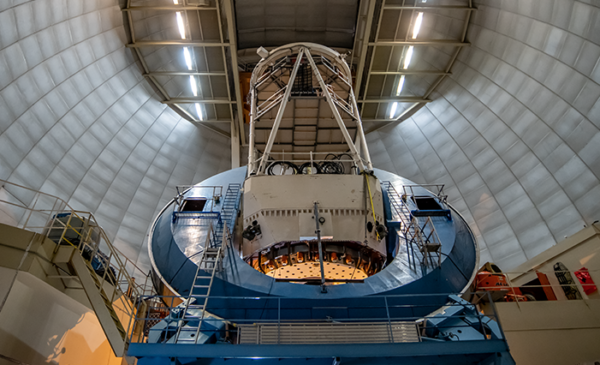
Dr. Douglass is currently a visiting Assistant Professor in the Department of Physics and Astronomy at the University of Rochester. Her research interests include observational cosmology, cosmic voids, galaxy formation and evolution, dark matter structure, and statistical analysis of large data sets. She is currently working with SDSS data, studying the large-scale environmental dependence of oxygen and nitrogen abundances (metallicity) in dwarf galaxies, and is a member of the DESI collaboration.
Wednesday, November 18, 2020
November Zoom Science Cafe: “2020 Elections: Polarization, Discourse, Democratic Institutions” by Prof. Lynda Powell (UofR)
For our November Zoom Science Cafe, we are mixing things up a little:
“2020 Elections: Polarization, Discourse, Democratic Institutions”
Professor Lynda Powell, Ph.D.
University of Rochester Department of Political Science
---------------------------------------------------------------------------------
Here is what you'll need for next week and all future Zoom meetings of the Science Cafe. If you run into any problems, please reply to this email and I will make sure you can get in.
Join Zoom Meeting
https://rit.zoom.us/j/96028743897?pwd=T3NGV0xUcEtTNzFQTkpUVUwwTXpsUT09
Meeting ID: 960 2874 3897
Passcode: 732879
Dial by your location
+1 646 558 8656 US (New York)
--------------------------------------------------------------------------------------
Dr. Powell's academic interests:
American politics. Current research focuses on the influence of campaign contributions in American legislatures and on legislative bipartisanship, polarization and representation. My most recent book, The Influence of Campaign Contributions in State Legislatures: The Effects of Institutions and Politics (University of Michigan Press, 2012) won the Fenno Prize, the best book award of the Legislative Studies Section of APSA, and was the inaugural winner of the Gray Prize, the best book award of the State Politics and Policy Section of APSA. A description of the book can be found here on the publisher's website. Other publications include The Financiers of Congressional Elections (co-authors Peter Francia, John Green, Paul Herrnson, and Clyde Wilcox; Columbia University Press, 2003); Term Limits in the State Legislatures (co-authors John Carey and Richard G. Niemi; University of Michigan Press, 2000); Serious Money: Fundraising and Contributing in Presidential Nomination Campaigns (co-authors Clifford W. Brown, Jr., and Clyde Wilcox; Cambridge University Press, 1995); and articles in journals including the American Journal of Political Science, the Journal of Politics and Legislative Studies Quarterly. Teaches courses in American politics. Directs European Political and Business Internships, Washington Semester Program and local internships, including District Attorney Internships and Public Defender Internships.
https://sas.rochester.edu/psc/people/view.php?fid=20
https://scholar.google.com/citations?user=BKYxIPkAAAAJ&hl=en
Friday, October 16, 2020
October Science Cafe (10/27@7pm): "The Only Surviving Hominin: Human Origins and Evolution”, by Dr. Howard Ochman (University of Texas, Austin)
Hi everyone, we are excited to announce the speaker for the Rochester Science Cafe's October talk:
Tuesday, October 27 @ 7pm:
"The Only Surviving Hominin: Human Origins and Evolution”
Dr. Howard Ochman (University of Texas, Austin)
Professor, Department of Integrative Biology
Apologies for any confusion last month with needing registration and/or a passcode for Zoom, that was a late addition to the RIT security protocols for public talks. The video of the talk is now available online, you can find it here on Youtube. Note that we were about 2 minutes in when I remembered to start recording.
Here is what you'll need for all future Zoom meetings of the Science Cafe:
Join Zoom Meeting
https://rit.zoom.us/j/96028743897?pwd=T3NGV0xUcEtTNzFQTkpUVUwwTXpsUT09
Meeting ID: 960 2874 3897
Passcode: 732879
Dial by your location
+1 646 558 8656 US (New York)
https://rit.zoom.us/j/96028743897?pwd=T3NGV0xUcEtTNzFQTkpUVUwwTXpsUT09
Meeting ID: 960 2874 3897
Passcode: 732879
Dial by your location
+1 646 558 8656 US (New York)
Saturday, September 12, 2020
September Science Cafe: The Road to a Pandemic COVID-19 Vaccine, by Dr. Angela Branche (UofR)
Hello to all the devoted friends and attendees of the Rochester Science Cafe!
Starting this Fall, and continuing on until it is deemed safe for us all to meet in person again, the Rochester Science Cafe is moving to Zoom (the Rochester Zience Cafe?). See below for details on how to join, and how to ask questions.
Our Fall 2020 series will begin on September 22, and continue on monthly. The first talk will be:
September 22, 7pm: https://rit.zoom.us/j/96028743897
The Road to a Pandemic COVID-19 Vaccine
Dr. Angela Branche
Assistant Professor, Department of Medicine, Infectious Diseases
University of Rochester Medical Center
To join the Cafe, simply follow the Zoom link above. Please note that Cafes will be recorded, so we can reach the broadest audience possible. There will be two ways to ask a question:
- Write it down in the "Chat", and one of the MCs, either David or Josh, will ask it for you
- Go to "Participants", and use the "Raise Hand" feature. Josh or David will unmute you and ask you to go ahead with the question.
We will allow the audience to leave their video on, but we recommend turning it off while you are just listening to save bandwidth, turning it on to ask a question.
During her years at the University of Rochester her focus in research involved the use of viral molecular and immunological diagnostic assays to explore the pathogenesis and host response to acute viral respiratory illnesses in adults. She is currently the clinical director of the NIH Center for Excellence in Influenza Research and Surveillance (CEIRS) New York Influenza Center of Excellence (NYICE) and Co-Principal Investigator for the UR Vaccine Treatment and Evaluation Unit (UR VTEU). Her current research activities explore clinical disease, pathogenesis, development of therapeutics and vaccine biology related to infection with viral and bacterial respiratory pathogens. Studies include assessment of asymptomatic carriage of Streptococcus pneumoniae and the impact of pneumococcal vaccination, surveillance of epidemic influenza infections and immunologic mechanisms of protection following natural infection versus vaccination, the development of pandemic influenza vaccines, population-based studies of RSV infection and the development of vaccine and anti-viral agents for RSV. Current efforts also include the study of the pathogenesis and immune response to pandemic SARS Coronavirus 2 infections and clinical interventional trials for the development of COVID19 therapeutic agents and vaccines. She is a member of the Infectious Disease Society of America and the NIH Human Cohorts Steering Committee and NIH IDCRC Emerging Infectious Expert Working Group. Dr. Branche has published several peer-reviewed articles, reviews and book chapters related to respiratory viral pathogens in adults.
Wednesday, March 11, 2020
March Science Cafe cancelled -- updates to follow
Dear Rochester Science Cafe Friends,
Out of an abundance of caution over the COVID-19 virus situation we have decided it best to cancel Seth Hubbard's March 24th Science Cafe.
We are taking our lead from local universities and colleges, who have cancelled all unnecessary meetings and gatherings for now.
In lieu of the cafe meeting, we'll try to post more science related content to both here and the facebook page:
Look for notifications there and via email for when we restart.
Stay safe, healthy, and informed!
Best,
Joshua Faber and David Goldfarb
Out of an abundance of caution over the COVID-19 virus situation we have decided it best to cancel Seth Hubbard's March 24th Science Cafe.
We are taking our lead from local universities and colleges, who have cancelled all unnecessary meetings and gatherings for now.
In lieu of the cafe meeting, we'll try to post more science related content to both here and the facebook page:
Look for notifications there and via email for when we restart.
Stay safe, healthy, and informed!
Best,
Joshua Faber and David Goldfarb
Saturday, January 25, 2020
Spring 2020 Cafe Lineup -- part 1
The Rochester Science Cafe is pleased to announce the first part of our Spring 2020 cafe lineup. Our first cafe will be this coming Tuesday, January 28, at 7pm. As always, we'll be at the Pittsford Plaza Barnes and Noble (3349 Monroe Ave.) upstairs in the community room. The talk will be:
Tuesday, January 28, 7pm
Artificial Intelligence: Assistant or Adversary?Dr. George Ferguson
Assoc. Professor, Dept. of Computer Science, UofR
We will discuss the rapidly evolving field of artificial intelligence to help us understand what exactly AI is, and whether we should be concerned or elated.
Our February and March Cafes will be:
February 25: Dr. Michael Lam (RIT) -- "Pulsars: Fundamental Physics with Nature's Best Celestial Clocks"
March 24: Dr. Seth Hubbard (RIT) -- Solar power (title TBD).
More on April and May to come!
---------------------------------------------
On another note, if you enjoyed our November Cafe on Perception by Edmund Lalor, here are some links that he sent along for further reading:
I had a couple of folks ask me for links to further reading etc. So, if you have a mailing list, here are some suggestions:
https://www.ted.com/talks/anil_seth_your_brain_ hallucinates_your_conscious_ reality
https://www.ted.com/talks/donald_hoffman_do_we_see_ reality_as_it_is?language=en
https://www.newyorker.com/magazine/2018/04/02/the-mind- expanding-ideas-of-andy-clark
And for the more committed folks:
https://www.fil.ion.ucl.ac.uk/~karl/Whatever%20next.pdf
https://www.amazon.com/Surfing-Uncertainty- Prediction-Action-Embodied/dp/ 0190217014
https://www.amazon.com/Case-Against-Reality-Evolution- Truth/dp/0393254690
https://www.amazon.com/Predictive-Mind-Jakob-Hohwy/ dp/0199686734
Sunday, September 15, 2019
Fall 2019 September Science Cafe lineup announced -- Welcome to our 11th year
Welcome to everyone as the Rochester Science Cafe begins its 11th year! We are excited to announce our Fall 2019 lineup as we continue on with Rochester's premier free monthly science talk series.
October 22
“Bacterial seashells: How to build your environment using bacteria” Dr. Anne Meyer, Ph.D.
Assistant Professor, Department of Biology
University of Rochester
As always, talks will be the fourth Tuesday of the month at 7pm, upstairs in the Community Room at the Pittsford Plaza Barnes and Noble, 3349 Monroe Ave. All talks are free, and coffee and cookies are provided.
This Fall, our lineup will be
September 24
September 24
“Health around the clock: human circadian rhythm in health and disease”
Dr. Brian J. Altmann, Ph.D.
Assistant Professor, Department of Biomedical Genetics
University of Rochester Medical Center
Dr. Brian J. Altmann, Ph.D.
Assistant Professor, Department of Biomedical Genetics
University of Rochester Medical Center
Circadian rhythms in mammals are 24-hour cycles that govern gene regulation and cellular metabolism. While many cancers have altered or disrupted circadian rhythms, there is little understanding of the implications of this disruption on cancer cell metabolism, tumor cell growth, and prognosis. We have previously shown that the MYC oncogene, commonly overexpressed in many human cancers, disrupts circadian rhythm and metabolic oscillations, which may provide a growth advantage to the cancer cell.https://www.urmc.rochester.edu/labs/altman.aspx
Our research focuses on identifying the intersections between circadian rhythm, cancer cell physiology, and metabolism. We utilize diverse cell line models of cancer and mouse MYC-driven lung cancer to focus on amplified MYC, the extended MYC family of related proteins, and nutrient input and metabolic stress signaling in circadian rhythm control. Better understanding of how tumors and metabolic input modulate the clock and the circadian metabolic cycle could aid in developing novel treatment strategies to time increased efficacy and reduced toxicity.
October 22
“Bacterial seashells: How to build your environment using bacteria” Dr. Anne Meyer, Ph.D.
Assistant Professor, Department of Biology
University of Rochester
November 26
“Perception as controlled hallucination”
Dr. Edmund Lalor, Ph.D.
Associate Professor, Departments of Biomedical Engineering and Neuroscience
University of Rochester
Dr. Edmund Lalor, Ph.D.
Associate Professor, Departments of Biomedical Engineering and Neuroscience
University of Rochester
Saturday, March 23, 2019
March Science Cafe (3/26): Dr. Lea Michel (RIT): "Prevention, Protection, and Diagnosis: One protein’s role in multiple diseases"
Our next Science Cafe talk will be this coming Tuesday, March 26. As always, 7pm at the Pittsford Plaza Barnes and Noble, upstairs in the community room. For this month, our topic is:
Dr. Lea Michel
Associate Professor, School of Chemistry and Materials Science
Chair of Women in Science & Director of Rochester Project SEED
RIT
Prevention, Protection, and Diagnosis: One protein’s role in multiple diseases
---------------------------------------------------
There will be two more talks in our Spring series as well:
April 23: Dr. Ernest Fokoue (RIT):
To Bayes or not to Bayes? That’s no longer the question!
A light on the ubiquitous power of the Bayesian paradigm in Data Science.
May 28: Dr. Andre Hudson (RIT):
Public Health Alert: Why should you care about antibiotic resistance.
Dr. Lea Michel
Associate Professor, School of Chemistry and Materials Science
Chair of Women in Science & Director of Rochester Project SEED
RIT
Prevention, Protection, and Diagnosis: One protein’s role in multiple diseases
The Michel research group has focused on the Peptidoglycan associated lipoprotein (Pal) protein from two pathogenic bacteria: nontypeable Haemophilus influenza (NTHi) and Escherichia coli (E. coli). NTHi causes ear infections and other respiratory illnesses, including chronic obstructive pulmonary disease (COPD). The Michel group aims to use the NTHi Pal protein in a vaccine to protect against these diseases. E. coli can be found in the human gut, where they act as a “good bacteria,” helping to maintain gut health. However, E. coli can also cause serious illnesses, including sepsis, which is extreme inflammation caused by a serious infection. In this research realm, the Michel group studies the role of Pal in sepsis and aims to prove that Pal is a useful biomarker for early detection and diagnosis of E. coli sepsis.https://www.rit.edu/science/michel
---------------------------------------------------
There will be two more talks in our Spring series as well:
April 23: Dr. Ernest Fokoue (RIT):
To Bayes or not to Bayes? That’s no longer the question!
A light on the ubiquitous power of the Bayesian paradigm in Data Science.
This conversation will unapologetically make a series of bold claims seeking to make the case that the Bayesian Paradigm just might be the single most fundamental building block of statistical machine learning and data science. A tour of some foundational concepts in statistics and machine learning will serve as the fulcrum for anchoring all the claims, but concrete examples of the power of the Bayesian thought in modern data science will also be provided.
May 28: Dr. Andre Hudson (RIT):
Public Health Alert: Why should you care about antibiotic resistance.
Antibiotic resistance is one of the major public health challenges of the 21st century. The recent death of a United States citizen who became ill with an infection caused by Klebsiella pneumoniaethat was resistant to twenty-six antibiotics highlights this important issue. The rise in the number of multidrug-resistant bacteria such as; Methicillin-resistant Staphylococcus aureus, Vancomycin inter-mediate and resistant Staphylococcus aureus, Pseudomonas aeruginosa (multidrug resistant strains), multi-drug resistant Mycobacterium tuberculosis among others has led to a significant increase in the morbidity and mortality of humans infected with pathogenic bacteria.
Tuesday, February 19, 2019
Science Cafe Spring lineup announced; First cafe in a week, 2/26
The Rochester Science Cafe is excited to announce our lineup for the remainder of the Spring series as we continue through our 10th year. Below is the lineup of the remaining talks.
Our net talk will be a week from today, Tuesday February 26, at 7pm at the Pittsford Plaza Barnes and Noble. As always, cookies, coffee and conversation upstairs in the community room.
We thank everyone for their patronage for this past decade, and look forward to a
few more!
-------------------------------------------------
February 26: Dr. Joel Kastner (RIT)
Professor, Chester F. Carlson Center for Imaging Science and
Astrophysical Science and Technology Program
"Needles in a haystack: the search for (and study of) young stars near Earth"
------------------------------------------------------------------
Our net talk will be a week from today, Tuesday February 26, at 7pm at the Pittsford Plaza Barnes and Noble. As always, cookies, coffee and conversation upstairs in the community room.
We thank everyone for their patronage for this past decade, and look forward to a
few more!
-------------------------------------------------
February 26: Dr. Joel Kastner (RIT)
Professor, Chester F. Carlson Center for Imaging Science and
Astrophysical Science and Technology Program
"Needles in a haystack: the search for (and study of) young stars near Earth"
Thousands of extrasolar planets ("exoplanets") have been discovered over the past two decades. Astronomers seeking to understand the astonishing variety of planetary masses and orbital separations that characterize these myriad exoplanet systems, as well as the earliest evolution of our own solar system, must carefully study exoplanet birthplaces: dusty, molecule-rich “protoplanetary” disks orbiting young stars. Here, I'll talk about recent advances in the study of protoplanetary disks using the recently commissioned Atacama Large Millimeter Array (ALMA) radio interferometer as well as the latest generation of adaptive optics (AO) cameras on the world’s largest (8-meter-class) optical/infrared telescopes. My talk will focus on ALMA and AO studies of the nearest-known disks; these young neighbors afford opportunities to image disk structures and chemistry on solar system size scales. Also, I'll talk about finding the source of the air we breathe, from an astronomical perspective.
------------------------------------------------------------------
March 26: Dr. Lea Michel (RIT)
Assoc. Professor, School of Chemistry and Materals Science
Chair, Women in Science program
"Prevention, Protection, and Diagnosis: One protein’s role in multiple diseases"
April 23: Dr. Ernest Fokoue (RIT)
Assoc. Professor, School of Mathematical Sciences
May 28: Dr. Andre Hudson (RIT)
Professor and Head, Thomas H Gosnell School of Life Sciences
"Public Health Alert: Why should you care about antibiotic resistance"
Assoc. Professor, School of Chemistry and Materals Science
Chair, Women in Science program
"Prevention, Protection, and Diagnosis: One protein’s role in multiple diseases"
April 23: Dr. Ernest Fokoue (RIT)
Assoc. Professor, School of Mathematical Sciences
May 28: Dr. Andre Hudson (RIT)
Professor and Head, Thomas H Gosnell School of Life Sciences
"Public Health Alert: Why should you care about antibiotic resistance"
Monday, September 24, 2018
On behalf of the Rochester Science Cafe organizers, we are happy to announce the Fall 2019 Science Cafe speaker lineup, as we mark our 10th year of operations. Back in September of 2009, little did we know how much of a fixture this would become for all of us, and hopefully how much we have been able to bring to all of you. In that spirit, here are our speakers and dates for Fall 2018/January 2019. As always, all talks will take place at the Pittsford Plaza Barnes and Noble, upstairs in the community room, on the fourth Tuesday of the month, 7pm. Cookies, coffee, conversation! We look forward to seeing everyone there!
-------------------------------------------------------------------------------
September 25
“HIV/AIDS in 2018: Progress & Persisting Challenges”
Dr. Michael Keefer, M.D.
Professor in Medicine
School of Medicine and Dentistry
University of Rochester Medical Center
Dr. Keefer's Research page: https://www.urmc.rochester.edu/profiles/display/137236
---------------------------------------------------------------------------------
-------------------------------------------------------------------------------
September 25
“HIV/AIDS in 2018: Progress & Persisting Challenges”
Dr. Michael Keefer, M.D.
Professor in Medicine
School of Medicine and Dentistry
University of Rochester Medical Center
Dr. Keefer's Research page: https://www.urmc.rochester.edu/profiles/display/137236
Bio: Dr. Keefer has over 18 years of experience in the preventive HIV vaccine field, having served as Director of the University of Rochester's NIH-supported HIV Vaccine Trials Unit (HVTU) since 1991. Working initially as a laboratory investigator he was the first to demonstrate T-cell mediated immune responses to a candidate HIV vaccine. Subsequently he focused his attention on the design and conduct of clinical trials. When the HIV Vaccine Trials Network (HVTN) expanded to include international sites in 1999, he assumed the position of the HVTN's Associate Director of Scientific Administration. In that role his duties include leadership of scientific and administrative committees and visits to international sites. Dr Keefer is also PI of an NIH-funded Program Project entitled "HSV-1 amplicon vectors for HIV vaccine delivery", a collaboration with Drs. Dewhurst, Mosmann, Federoff and Bowers.
---------------------------------------------------------------------------------
Upcoming Cafes:
October 23
““What?” How Hearing Loss Affects Speech Perception”
Dr. Laurel Carney, Ph.D.
Marylou Ingram Professor of Biomedical Engineering
Departments of Biomedical Engineering, Neuroscience, and Electrical & Computer Engineering
University of Rochester
November 27
Dr. Laurel Carney, Ph.D.
Marylou Ingram Professor of Biomedical Engineering
Departments of Biomedical Engineering, Neuroscience, and Electrical & Computer Engineering
University of Rochester
November 27
“Alien Worlds and the Fate of the Earth”
Dr. Adam Frank, Ph.D.
Professor of Physics and Astronomy
University of Rochester
January 22
Professor of Physics and Astronomy
University of Rochester
January 22
“Oceans and Climate Change: Greenhouse Gas Gusher to Gas Gobbler”
Dr. John Kessler, Ph.D.
Associate Professor
Department of Earth and Environmental Sciences
University of Rochester
Dr. John Kessler, Ph.D.
Associate Professor
Department of Earth and Environmental Sciences
University of Rochester
Monday, May 21, 2018
May Science Cafe: 5/22, 7pm -- Dr. Andrew Robinson (RIT) -- "Monsters on the Move: searching for gravitationally recoiling supermassive black holes in “nearby” galaxies"
Please join us tomorrow night, May 22, at 7pm for our final Science Cafe of our ninth year. As always, the talk will be at the Pittsford Plaza Barnes and Noble, upstairs in the community room. The talk will be:
Monsters on the Move: searching for gravitationally recoiling supermassive black holes in “nearby” galaxies
Dr. Andrew Robinson
School of Physics and Astronomy
RIT
We look forward to seeing everyone there!
Monsters on the Move: searching for gravitationally recoiling supermassive black holes in “nearby” galaxies
Dr. Andrew Robinson
School of Physics and Astronomy
RIT
We look forward to seeing everyone there!
Monday, April 23, 2018
April Science Cafe -- Dr. Christy Tyler (RIT) -- "Rethinking ecosystem restoration in a changing environment"
Please come join us tomorrow (April 24) as we will present our April Science cafe, 7pm as always at the Pittsford Plaza Barnes and Noble (3349 Monroe Ave) Upstairs in the community room. This month's talk will be:
Rethinking ecosystem restoration in a changing environment
Dr. Christy Tyler
Associate Professor, Thomas H. Gosnell School of Life Sciences
Director, Graduate Programs in Environmental Science
Rochester Institute of Technology
For more on her work, check out the website for the Tyler Aquatic Ecology Lab.
On May 22, we will close the 2017-8 season with a talk by Dr. Andrew Robinson, Associate Head of RIT's School of Physics and Astronomy, and former Program director of the Astrophysical Sciences and Technology.
Rethinking ecosystem restoration in a changing environment
Dr. Christy Tyler
Associate Professor, Thomas H. Gosnell School of Life Sciences
Director, Graduate Programs in Environmental Science
Rochester Institute of Technology
The functioning of natural ecosystems is controlled by complex interactions between living and non-living components of the ecosystem. These interactions can be very difficult to replicate when trying to restore, or create anew, an ecosystem on land previously used for another purpose. Contemporary ecosystem restoration is further complicated by our changing environment: the species of plants and animals in our region has changed, nutrients are more plentiful, the weather is more extreme, and the overall climate is changing. Successful projects thus require an understanding of legacy conditions, shifting environmental constraints, and a toolkit of restoration techniques that promote the development of a healthy ecosystem. In this talk, I’ll describe my experiences with wetland restoration and how our changing environment has forced us to rethink the process of restoration and our expectations of what’s possible.
For more on her work, check out the website for the Tyler Aquatic Ecology Lab.
On May 22, we will close the 2017-8 season with a talk by Dr. Andrew Robinson, Associate Head of RIT's School of Physics and Astronomy, and former Program director of the Astrophysical Sciences and Technology.
Monday, March 26, 2018
March Science Cafe: 3/27, 7pm: Dr. John Whelan (RIT) -- "The Science of Uncertainty"
Hello everyone, the Rochester Science Cafe's March talk will be tomorrow, Tuesday, March 27, 7pm, in our regular location in the Community Room upstairs at the Pittsford Plaza Barnes and Noble. Our speaker will be
Dr. John Whelan
Assistant Professor, School of Mathematical Sciences,
Center for Computational Relativity and Gravitation
RIT
The Science of Uncertainty
The talk: Tuesday, March 27 at 7pm
Location: Pittsford Plaza Barnes and Noble, 3349 Monroe Avenue, upstairs in the community room
For more on John's work, check out his website, http://ccrg.rit.edu/~whelan/ or a story from RIT about the recent LIGO detections: https://www.rit.edu/news/story.php?id=64318
--------------------------------------------------------------------------------------
Upcoming Spring Cafes:
April 24: Dr. Christy Tyler (RIT): "Aquatic Ecosystem Ecology"
May 22: TBD
Dr. John Whelan
Assistant Professor, School of Mathematical Sciences,
Center for Computational Relativity and Gravitation
RIT
The Science of Uncertainty
For most of the twentieth century, probability was considered to apply only to inherently random, ideally repeatable experiments. More recently, this classical "frequentist" formalism has been displaced by a more general "Bayesian" outlook that sees probabilities as a way to describe any incompleteness in our state of knowledge. I will discuss how this view of statistical inference, empowered by the ability of computers to calculate the relevant probabilities numerically, informs our interpretation of a range of information, from prenatal screening, to election forecasting, to observations of gravitational waves.
The talk: Tuesday, March 27 at 7pm
Location: Pittsford Plaza Barnes and Noble, 3349 Monroe Avenue, upstairs in the community room
For more on John's work, check out his website, http://ccrg.rit.edu/~whelan/ or a story from RIT about the recent LIGO detections: https://www.rit.edu/news/story.php?id=64318
--------------------------------------------------------------------------------------
Upcoming Spring Cafes:
April 24: Dr. Christy Tyler (RIT): "Aquatic Ecosystem Ecology"
May 22: TBD
Monday, February 19, 2018
The Rochester Science Cafe will be back next week as we kick off our Spring 2018 season. On Tuesday, February 27, our speaker will be
Dr. John-David Rocha
Assistant Professor, School of Chemistry and Materials Science, RIT
Nanomaterials: scientific wonder or scientific fiction?
Many would say the study of nanomaterials goes back approximately 30 years to the discovery of buckyballs, back in the mid-1980s. Others argue we've been using nanomaterials for hundreds, if not thousands of years. Regardless, the current generation of nanomaterials are often hailed from some quarters as things that will change our lives in energy, in medicine, and in environmental applications. All the while, their use commercially in major projects has been significantly held back by a number of different issues. The question becomes: how, when, where ,and why will nanomaterials play a role in society and technology going forward? Will they go by the wayside as a science fiction idea that never bore fruit or become a science reality powering all of the next-generation materials and technologies of the later 21st century, and on into the 22nd and beyond? In this talk, I hope to explain about nanomaterals in general, and share insights from the academic, governmental, and industrial spheres about their many potential uses.
The talk: Tuesday, February 27 at 7pm
Location: Pittsford Plaza Barnes and Noble, 3349 Monroe Avenue, upstairs in the community room
For more on John-David's work, check out his website, or a podcast he did back in 2015.
Cheers, Josh
--------------------------------------------------------------------------------------
Upcoming Spring Cafes:
March 27: Dr. John Whelan (RIT): "The Science of Uncertainty"
For most of the twentieth century, probability was considered to apply only to inherently random, ideally repeatable experiments. More recently, this classical "frequentist" formalism has been displaced by a more general "Bayesian" outlook that sees probabilities as a way to describe any incompleteness in our state of knowledge. I will discuss how this view of statistical inference, empowered by the ability of computers to calculate the relevant probabilities numerically, informs our interpretation of a range of information, from prenatal screening, to election forecasting, to observations of gravitational waves.
April 24: Dr. Christy Tyler (RIT): "Aquatic Ecosystem Ecology"
May 22: TBD
Sunday, January 21, 2018
January 2018 Cafe cancelled, will be rescheduled
Unfortunately, our speaker for Tuesday's Science Cafe has had to cancel at the last minute, and David and I agree it is too late to try to arrange a last-minute speaker. We are going to cancel this Tuesday's cafe, and see if we can schedule him again at a later date. Just to reassure everyone, we do plan to have cafes from February to May, this was a one-time last-minute cancellation outside our control.
Apologies for the last-minute notice, we'll have an announcement with the Spring lineup going out very soon.
Sunday, September 24, 2017
Fall 2017 Cafes announced -- our Ninth season!
Hi everyone, we are thrilled to announce that we will be returning this year for the ninth year (and counting!) of the Rochester Science Cafe. As always, we will be hosting cafes on the fourth Tuesday of the month, September -- November and January -- May. All talks will be at 7pm, at the Pittsford Plaza Barnes and Noble, 3349 Monroe Ave., upstairs in the Community Room. Everyone in the community is welcome, and the talks will be free to everyone, even including refreshments.
Without further ado, Our Fall 2017 schedule is as follows:
Spring 2018 Cafes will be announced later in the season. We look forward to seeing everyone there!
Without further ado, Our Fall 2017 schedule is as follows:
- Sept. 26: “Prospects for a Universal Flu Vaccine”
Dr. John Treanor, M.D.
Professor, Departments of Medicine and Microbiology and Immunology
University of Rochester Medical Center - October 24:
“Scientific Challenges to Darwin’s Theory of Evolution”
Dr. John Jaenike, Ph.D.
Professor, Department of Biology
University of Rochester - November 28:
“Life after smartphones: the evolution of the human-information interface”
Dr. Mark Bocko, Ph.D.
Professor & Chair, Department of Electrical and Computer Engineering
Director – Center for Emerging and Innovative Sciences
University of Rochester - January 23, 2018:
“Dark Matter and Dark Energy: Where is 95% of the Universe?”
Dr. Frank L.H. Wolfs, Ph.D.
Professor, Department of Physics and Astronomy
University of Rochester
Spring 2018 Cafes will be announced later in the season. We look forward to seeing everyone there!
Subscribe to:
Posts (Atom)